

September is National Suicide Prevention Month, a time to raise awareness about the circumstances that can contribute to suicidal thoughts and behaviors. For LGBTQ+ people in particular, challenges such as depression, isolation, hopelessness, discrimination and lack of support can be further compounded by the communities and environments in which they live.
The problem and its causes go beyond whether or not mom and dad offer unconditional love and acceptance to their LGBTQ offspring or who is being bullied during school recess. The climate outside the homes of LGBTQ community members is a major contributing factor as well. Hate and disregard aimed at our community walk hand-in-hand with feelings we experience: anxiety, depression, hopelessness and even suicidal contemplation.
As previously reported by Qnotes, during the 2022 and 2023 legislative sessions, 20 anti-LGBTQ+ bills were introduced in North Carolina, and five were passed into law. During this time, The Trevor Project found that 71 percent of LGBTQ+ youth say their mental health is declining due to restrictive state laws and the debates surrounding them.
More recent state-level findings further demonstrate how geography and a person’s surrounding environment can influence the experiences of LGBTQ+ youth. The Trevor Project’s 2025 state report found that several Southern states reported some of the nation’s highest levels of difficulty accessing mental healthcare, anti-LGBTQ+ discrimination and low community acceptance. For example, 63 percent of LGBTQ+ youth surveyed in South Carolina who wanted mental healthcare were unable to access it, while 65 percent in Alabama and 66 percent in Arkansas reported experiencing discrimination based on their sexual orientation or gender identity.
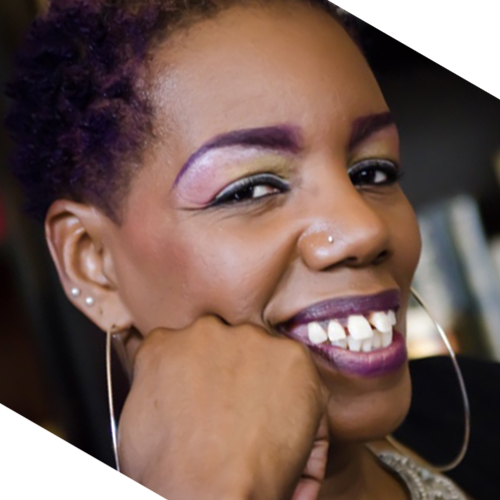
Toni Morrison (he/they), a queer, nonbinary young adult from Charlotte, shared his experience with depression and suicidal thoughts that began as early as grade school. Morrison recalled feeling isolated and unheard during some of the most difficult periods of his life. “In the times when I felt like taking my life into my own hands, I felt as though I had no one listening to me. I didn’t feel like anyone cared about me or was interested in the things that were making my life experience emotionally unbearable.

Credit: Facebook
“Fortunately, I was able to overcome those [thoughts] through my spiritual practices. Staying connected to the belief that my life and existence are part of a ‘bigger picture’ helped to ground me when my circumstances seemed bigger than my capacity to handle them.
“I never sought therapy because, I suppose, I always looked at that time as a ‘phase’ in my life. I viewed it as an experience and not necessarily something I had to be intentional about healing from. [But] if I had those feelings today, I would seek counseling immediately, while remembering what makes me strong spiritually when I’m feeling overcome emotionally or mentally.”
As alarming as youth statistics are it’s also important to know that LGBTQ+ youth don’t suddenly stop battling the issues that lead to suicide once they turn 21. Far too many LGBTQ+ adults face similar issues accompanied by thoughts and attempts of suicide — while the current political climate adds fuel to the fire which anti-LGBTQ legislation, and the mentalities emboldened by such legislation, create.
The National Alliance on Mental Illness (NAMI-Charlotte) has reported lesbian, gay and bisexual adults are more than twice as likely as heterosexual adults to experience a mental health condition (especially depression and anxiety disorders), and transgender individuals are nearly four times as likely as cisgender individuals to experience a mental health condition.

NAMI, an inclusive organization which has two branches (one in New York and one in Charlotte, collectively serving over 40 states), has made an effort to address the LGBTQ mental healthcare disparity by offering a free, confidential and peer-led LGBTQ+ monthly support group.
The groups always have two facilitators, but the conversation is freeform and typically evolves organically. “There’s no discussion checklist,” says NAMI-Charlotte Program Director Audra Murray. “Our agenda is an open forum, [so] people can share with others who understand [through lived experience] what they are going through — our role is to provide that safe space for them to do it.”
Mental health services are as diverse as the people accessing them. For some, they are looking for support and therapists who mirror their identities. For others, there are mental health services that allow clients to use particular criteria, including LGBTQ+ identity, to locate a mental health professional.

Licensed Clinical Mental Health Counselor Associate Zoe Harrison — a Charlotte Trans Health member, therapist and founder of Rainbow Connections Counseling — is one of them.
Harrison says she has noticed an uptick of hopelessness “as of late” with LGBTQ+ youth. She shared her observations and information about ways LGBTQ+ folks can find light in the darkness while seeking professional help.
“I really like to lean into a strength based approach by asking clients [how] they find hope and find community and start there.”
Harrison added that she reminds LGBTQ+ clients to recall the historical aspect of recognizing that we don’t exist in a vacuum and there is precedence for our existence and fighting against oppression and the hopelessness that comes with that.
“Connect with people who are passionate about the things you’re passionate about,” she urged. “There are so many of us who are kind and excited to connect — so find community on the ground, in real life — it inspires hope.”
Licensed Clinical Mental Health Counselor Supervisor Mya McFadden, Ed.D (Doctor of Education), another local mental health professional, also weighed in on mental health and the LGBTQ community. She noted the challenges LGBTQ people are facing now more than ever, McFadden noted: “Because of all the funding cuts in diversity services [and] barriers, we’ve had to shift to highlighting inclusivity in our efforts to continue to meet the needs of the LGBTQ community.”
McFadden, who also trains and supervises therapists and mental health workers, understands why LGBTQ community members might now be so apt to seek help as opposed to those who don’t share their identity.
Regardless of the route our community takes, one thing is clear: Suicide is not the answer. There is hope, and there are many resources and coping strategies available to help us navigate the complexities of our lives, our communities and the uncertainty and stress created by the current political climate.
This story is brought to you by Rosedale Health and Wellness and Dudley’s Place.
