
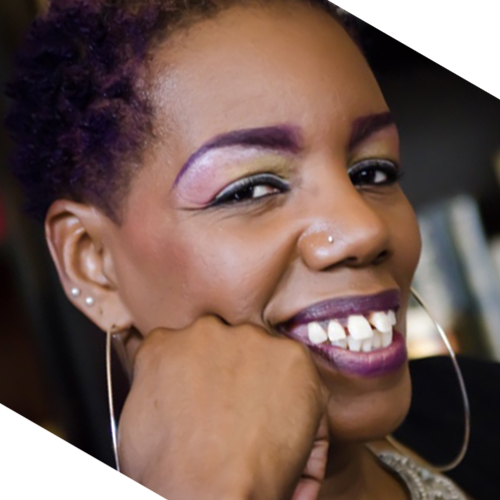

Sebastian Marin: ‘La comunidad Latine es sinónimo de progreso. Y no vamos para atrás ni para tomar impulso.’
In 2021 UNC Charlotte collaborated with Johnson C. Smith University to host what would become an annual intercollegiate World AIDS Day event. The event would be chock full of community health organizations tabling and spreading awareness with throngs of students and community members attending.
The aim was to have providers in a non-clinical setting provide information, testing, different providers as diverse as the students and to create a continuum of care. And that’s what happened. The Mecklenburg Health Department was there providing free rapid HIV testing and other organizations (like Quality Comprehensive Health Center/The Power House Project, RAO, RAIN and a few others) offered screenings, information and engaging activities.
That first event was quite successful – experienced first hand by this writer – on the campus of my alma mater, UNC-Charlotte and later at Johnson C. Smith University. It was also the day I met Sebastian Marin, a young man with a prominent Colombian accent and a zest for advocacy. Though my ability to speak Spanish is quite limited (mainly consisting of greetings, food, numbers 1 through 10, and a few profane words) we connected immediately.
That day, a coworker and I were tabling for the health and wellness community-based organization we both provided HIV intervention and prevention for. While on a break to spread the word about what was happening on the second floor of UNCC’s Student Union, I spotted Marin walking by the room I and other community organizations occupied for the event. After trying to explain and realizing there was a bit of a language barrier I hooked his arm, placed a few condom lollipops (a stigma and harm reduction tool) into his free hand and brought him back to the room with me.
My guess would be that Marin was somewhat motivated and impressed by the condom lollipops and the event, though neither of us knew at the moment we were creating the foundation of what would become a lasting relationship in a fight for health equity for under served communities. I would later learn that Marin, an undergraduate student who at the time was part of UNCC’s PLEASE (Peer Leaders & Educators Advocating for Sex Education) and our paths would cross again as he became involved in planning, promoting and spreading awareness about the World AIDS Day Event.
I did notice the Latinx community wasn’t heavily represented at events like this or in conversations about HIV/AIDS health and awareness, although Marin would later join what he referred to as“an intercollegiate HIV awareness campaign, which propelled me to volunteer and expand an event to a series of monthly HIV testing events in the student union.”
Since that time, he continues to advocate for sexual health awareness for the Latinx community and others with multiple efforts that include participating in monthly Getting to Zero meetings and contributing his insight to county Ryan White Planning Body meetings.
So what accounts for a lack of engagement of Latinx communities when it comes to HIV? There are a number of factors and barriers Marin was willing to discuss.
“When we think about barriers to HIV education and awareness, cultural competency and accessibility [matter]. When we think about awareness, stigma is a big part of that – discrimination regarding sexual behaviors and HIV status. People don’t know as much as they should about resources like PrEP and living a full life for those already living with HIV.
“What makes [combating] this challenging is f*cked up legislation that doesn’t address sexual health and goes as far as preventing educators and even penalizing them for having discussion with students on sexual and reproductive health,” Marin continues.
“Cultural competency is another barrier. Many first generation Latinx people experience these barriers, especially surrounding language. It takes language to be able to navigate social and health care systems. These are people who already have experienced barriers to access in their home countries based upon the taboos surrounding sex, sexual behavior and religion. It all makes it hard to access sexual health care.
“When we look at the social determinants of health, particularly for someone who has already internalized stigma, working lower paying jobs and having few connections to affirming health and wellness; coming out and seeking care is extremely difficult.”
At some point, data influenced by cultural barriers has been another contributor to the lack of engagement from the Latinx community. Simply put, focus and funding is directed towards data that shows the the greatest need and trickles down from there. When barriers prevent you from engaging people you can’t gather the data needed to support them.
Statistics show that Black men who have sex with men (MSM) are at extremely high risk of contracting HIV. In both local and national efforts, the desire to respond in a manner that quells these rates has lead to a focus on that demographic. In context, this is not necessarily a bad thing, but it does mean that other populations, like the Latinx community and heterosexual Black women may lag behind when it comes to representation, engagement and care in the fight to end the epidemic of HIV.
Data collected by the North Carolina Electronic Disease Surveillance System (NCEDSS), data as of July 2024 and prepared by the Mecklenburg County Public Health Epidemiology Program in October 2024 shows a one percent decrease (from 2022 to 2023) in new cases for Black community members and a one percent increase for Latinx community members.
For both years (as well as previous years), the majority of new cases were found in men who have sex with men (locally and nationally). In 2023 Mecklenburg County had a reported 272 new HIV/AIDS cases. Of those 85 percent were found to be men; 63 percent were Black, 22 percent were Latinx and 18 percent were Caucasian.
To date, sexual contact remains the primary vehicle of contracting HIV across all races, ethnicities, genders and age groups. However, it is also important to note that data on the rates of new HIV/AIDS cases is subject to change as barriers are dismantled and new information becomes available.
Meagan Zarwell, PhD, is an Assistant Professor of Epidemiology and Community Health at UNC-Charlotte who definitely knows something about data, stigma and how social determinants of health can impact the individuals behind the numbers. Working tirelessly in partnership with academic and health organizations, she was one of the organizers of the intercollegiate world AIDS day event I originally met Marin.
Dr. Zarwell echoed many of Marin’s sentiments, while adding a plea for change that offers greater health equity. “Several social, political, and cultural factors are likely interacting that contribute to increases in HIV diagnoses among Latine/x people,” Zarwell said.
“For example, stigma and discrimination, access to culturally sensitive health services, language barriers, access to health insurance, housing and socioeconomic status among other factors likely drive disparities in the number of new diagnoses,” Zarwell continued. “In addition, there have been missed opportunities to increase representation of Latine/x individuals in medicine, research, messaging and interventions to reduce HIV. It is a critical time to raise awareness and provide information about resources for Latine/x individuals in our community, including free HIV/STI testing, preventative medications, and treatment.”
When Marin was asked what concerns him most about the future of Latinx health and wellness he replied, “I think my biggest concern is how divisive the country is and the fact that there is a very discriminatory agenda being promoted – especially when it comes to Transgender rights.
“It’s just terrible. There are trends lead by Republican dominated states that limit access to reproductive services, access to abortion, IVF and having first access to clinics who provide services like HIV services, PrEP and care. If we take those clinics away, we are fostering greater gaps in access to care.”
Marin’s concerns are justified. According to a report from the National Institute of Health (NIH) the rate of infection for Transgender women is higher than the MSM population. From the NIH report: “Limited information … is available regarding the needs of black TW and their risk for HIV. Numerous scholarly works and surveillance reports have combined TW with MSM, which has stymied our ability to understand the unique needs of black TW.”
So what can be done? Are we any closer to reaching the CDC proposed goal of a 90 percent decrease in new HIV occurrences by 2030? According to Marin, probably not.
“Because we seem to be deepening the barriers to HIV services, care and further stigmatizing gender while seemingly creating more obstacles that allow people to live more fully. Hopefully – we will realize as a nation that we need to do better.
“We need to uplift each other when needed because, if you think about it from an economic standpoint, people who are sick do not produce and require someone else to care for them. When you think about that, on a social level; health equity is needed in order for people to live their best lives and in a way where they are able to continue to contribute to communities we love and share.”
Marin added a more optimistic note: “I am hopeful that we – resilient, dedicated people – who are passionate and resourceful will eventually end the epidemic through working together. I recently witnessed an instance with the state of Tennessee.
“They didn’t want to take funding from the CDC for HIV management, but people worked around it. They somehow managed to continue to take care of the populations they serve. The sense of community and resourcefulness was very empowering and motivating. It gives me hope that one day we will get there.”
Photo by Philip Crowther
