

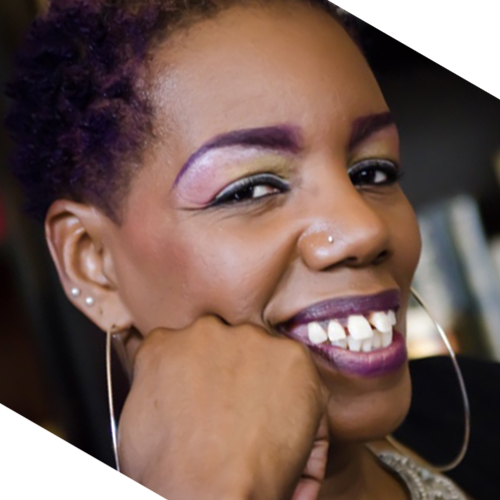

On a damp and chilly fall day in the Carolinas there’s a soft warm ray of light coming from Indian Land, South Carolina. The neighborhood is about a half an hour from Charlotte if you take I-77 or I-485; close enough for Sonja Lee to commute and be a fixture in Charlotte (where she once lived and worked) and a resonating voice.
Lee is a quintessential advocate for the underserved and a listening ear for anyone needing comfort and/or a spiritual uplift. During our interview, she’s nestled in a comfy recliner, facing a window with a breathtaking view of a fountain (she had it installed for visiting Cardinals) and trees boasting brilliant colors of fall foliage. In her typical calm and laid-back demeanor, Lee shared her joys, concerns and hope for a better future for our community.
L’Monique King: Are you a North Carolina native?
Sonja Lee: No, I’m a native Washingtonian. I’m from Washington, D.C.
LMK: How long have you lived in South Carolina?
SL: I moved from Charlotte to Indian Land in 2009 with my wife and our two kids. Our son was having some academic struggles in CMS so we made the effort to move in order to support him. [Prior to that] I moved to Charlotte from DC in 1999. At that time, I was working with the Red Cross in their finance department. They were a wonderful employer. I moved to Charlotte to help establish a financially shared services center for the Red Cross. The idea was to consolidate the accounting systems across all Red Cross chapters and regional offices. I retired from the Red Cross in 2015.
LMK: Is that when you started your own organization?
SL:. No, it was before that. In 2005 my brother Lionel Lee, Jr., died from heart complications. It was so sudden, my family and I were devastated. He was truly a big brother you’d want to have. So, to do something positive with my grief, in 2006 I established the Lionel Lee, Jr. Center for Wellness. In 2008 we received our 501c3 status. I serve as the founder and eExecutive dDirector.
LMK: What does your organization do?
SL: Our center supports and empowers people (especially those with chronic illness) who do not have adequate insurance coverage. We assist people who are uninsured and/or under insured obtain their medications, get to doctors appointments and other basic needs as we’re able. The organization will be 20 years old next year. At the time of starting, we received no funding and heavily relied on community donations to do the work. We didn’t receive our first grant until somewhere around 2010 from The Charlotte Lesbian and Gay Fund (now The Plus Collective).
LMK: Word has it that your impact on our community runs even deeper than being an eExecutive dDirector with a financial background but it’s also spiritual. Can you tell us a little about also having the title of Reverend?
SL: I am a clergy member of Unity Fellowship Church. My first exposure to them came via attending a social function they had. It was festive and well attended. I was greeted by a warm and friendly gentleman at that gathering –- unaware he was a clergy member. He was engaging, personable and didn’t lead with his title – which really made an impression on me. The following year I moved to Charlotte and ran into Gwen Woodard. She called me and offered me the opportunity to show her and her partner (Bishop Tonja Rawls who she later married) around Charlotte – with the intention of possibly starting a church in Charlotte. At the time, I didn’t have a church home and the experience felt divinely ordered. Shortly thereafter the church (Unity Fellowship Church – Charlotte) was established on MLK Sunday of 2001. At that time Unity Fellowship Church Charlotte was the first African American led [LGBTQ] affirming church in Charlotte and I became a founding member under the leadership of Pastor Tonyia Rawls.
LMK: Wow, so that’s how it all began. Fast forwarding to today, we’re living in tumultuous times. As a clergy member and oOut lesbian clergy member at that – how do you support folks during such turbulence and uncertainty.
SL: Everyone that I engage with recently has some type of worry, stress or trauma because of our current political climate. I’ve also seen an uptick at the Wellness Center in requests for food. People are calling with concerns about their Food Stamps being cut. For those people we make referrals – trying to fill the gaps between having food and hunger. I’ve had to do that even more than I have for medication. And sadly, that is most likely to change [as more and more cuts to basic needs come down the pike from Capitol Hill]. There’s such despair in many cases and in others, people are just pissed off about the current political climate; especially this blame game that’s taking place in congress. While we’re shut down, congress is just chilling, still getting six figure salaries while others are really struggling. So, I address this with a listening ear, sometimes prayer and other times by offering next steps in trying to find solutions. Overall, I’m there to support and advocate for our people.
LMK: As a 72-year-old Black lesbian living, working and supporting community during this administration, are you fearful?
SL: I’m concerned of course, but I’m not fearful. My spiritual anchoring says, this is all going to work out the way it’s supposed to. I’m concerned about our people, absolutely – the erosion of our rights as LGBTQ folks; the denial of gender affirming health care, our rights to marry, adopt children and just love who we love.
LMK: You do so much for so many. Who is there for you? Who do you lean on?
SL: Friends and family. It means so much to me when friends and loved ones ask me how I’m doing. And there’s always my incredible son. If I didn’t do another darn thing right, it’s him, with the help of my village. I can talk to him about anything; we touch base at least once a week. He’s a source of strength, compassion and love personified. [Outside of my son] I also have family, grand babies and church family, especially my Senior Bishop Jaquelyn Holland. She’s a confidant, spiritual anchor and very good fiend. And one day, I may have a partner to add to that list <gentle chuckle>.
LMK: Describe the partner you’d like to add to your list of supportive loved ones.
SL: She is so femme. She’s a Black woman whose also spiritually anchored. She’s fun to be around, family oriented, smart, loves to travel and loves to be home.
LMK: Looking at your life journey, what are two of your proudest moments?
SL: There have been so many. But the day I took my son to college was a big one. He went to Florida A&M. My father and I drove him to school and I felt like “job well done, mom,” while still crediting my village. It was a sense of accomplishment seeing my son go off to college. When I think about it, no one in my immediate family had gone to college. My son was the first born of the grandchildren. None of my siblings had attended at that time. My second proud moment would be my own graduating – from Union Presbyterian Seminary where I received my mMaster of aArts in Christian eEducation.
LMK: When you hear the word regret, what’s the first thing that comes to mind?
SL: That first drink. On my 18th birthday, I thought I was grown and had a drink. It made me sick as dog, the rum and coke. The next day I decided to try something different – Yago Sangria. I then transitioned from wine and beer to weed and then I was off to the races. From the age of 18 to 42 alcohol and drugs were a major part of my life. At age 42 I’d had enough and decided to get some help. Over my 30 years of sobriety, I have focused on being a source of experience, strength and hope for those who suffer from the disease of addiction.
LMK: Congratulations on your longevity in being sober and drug free. How do you start your days? Are you a breakfast person?
SL: I am. I love breakfast! I like preparing my own breakfast and having the first meal of the day in my home. I like eggs, grits (which I never ate until I moved to the south), bacon, fruit and tea.
LMK: If you could go back in time and meet someone you admire who would it be?
SL: There would be many. Probably Maya Angelou. Further back, Josephine Baker – even further back, Harriet Tubman.
LMK: Speaking of traveling, where have you traveled that you want to go to again and again?
SL: Aruba. When I grew up, I lived in a three-bedroom house with one bath, my grandmother, mom and my five siblings in a working class mostly segregated nice neighborhood. So, I always sought out and appreciated quite places. As a child I wanted to live on Gilligan’s Island. <laughter>. So, I just love Aruba, the water;, it’s quiet, it’s serene. The people are friendly and there aren’t too many of them. It’s a desert island in the middle of the ocean – just the irony of that blows my mind. It’s very beautiful. I’m going back in December.
LMK: Is there anywhere you haven’t been that you look forward to visiting?
SL: East Africa. Specifically, Tanzania and Zanzibar.
LMK: Before we go, can you offer a few words of wisdom to our youth community?
SL: Don’t use no matter what. Pursue the vision that you have for your life. Stay focused.