
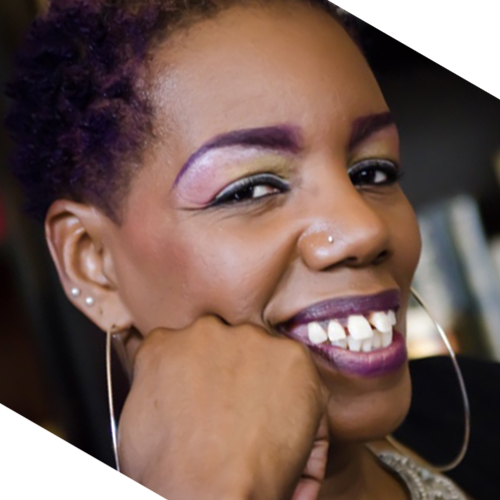

Bishop Dr. Ra’Shawn Flournoy has been a Charlotte resident since relocating from his hometown of Spartanburg, South Carolina, in 2012. These days, he’s a busy individual, and has his hands in a little bit of everything.
As a youth, he began his education in special needs classes. As an adult, he has gone on to earn a doctorate degree and capture praise and respect for his community service and successful entrepreneurship. Despite the challenges he faced in his early years, Flournoy has a comfortable sense of self-assurance and he’s happy to share his story with Qnotes.
L’Monique King: Now that you’ve been in the area for over 10 years, do you see yourself relocating away from the Carolinas?
Ra’Shawn Flournoy: No. I love it. I love the diversity of Charlotte. I feel like this is home for me. I do wish I could bring downtown Greenville to Charlotte though. It’s beautiful – but you can’t put a park and a river in the middle of uptown <chuckles>.
LMK: Let’s talk a bit about your success. Talk to us about your journey from struggling to a relatively comfortable life. More specifically, how does a formerly homeless Black gay man from a small town go from spending nights sleeping in his car to becoming a Bishop, an author, property owner and business mogul?
RF: In 2017 I left the non-profit I was working for to go work for a community clinic. I didn’t like it very much. So, I quit, without a plan or anything. When my money ran out it resulted in homelessness, initially sleeping in my car and then living in the church where I was pastor – [and founded in 2012] until I could figure it out. To this day many people don’t know [I did] that. As a pastor, I’ve never taken a salary. I wasn’t going to have the sheep taking care of the shepherd. I don’t agree with that. My job as a leader, as a pastor, calls for me to be there for my congregants. So, even in my situations of homelessness, while I was sleeping in the church, I still felt I was called to empower folks.
But for me, I guess I would say, part of my homelessness was by choice. Let me explain that. I came from a family that would most definitely give me the world [monetarily]. But during that homelessness journey I didn’t want to depend on anyone but me to get me out of it. So, I took that opportunity to work on my credit. [In doing so] I thought, this needs to be a business. So, I started a credit repair business, offering others the tools to repair and establish credit and a book to guide them in their process of debt recovery. The credit business then grew into what is now Flournoy Enterprises, a capital investment enterprise that is comprised of several different companies and social enterprises with community give back.
LMK: As the owner of multiple businesses, what would you say is the biggest or most frequent mistake most folks make in starting a business?
RF: Not having a strong business plan. We have lots of people who are visionaries, which is great. But it’s also about how you implement the vision you have, having the resources and willingness to make the sacrifices required to grow a business.
LMK: Let’s switch gears to one of your more personal positions, fatherhood. With so many options now available for starting a family, we’ve just got to ask, how’d you become a dad of two?
RF: <Chuckles> It was God sent. As a little girl, my daughter Eymiah was a member of my church. She gravitated towards me. She called me her dad. Moments like those were very precious to me because growing up I really didn’t have a true father figure in my life. I too saw my pastor as my father, but even he let me down – never attending my school events or special moments. So, when Eymiah was still in elementary school I attended father-daughter dances with her and other activities. Being there for her was an easy decision for me because I never wanted to let a child down like I had been.
My youngest, Javion is my special blessing. He came into my life in a way I would have never imagined. I was going through a separation from my [then] husband at the time. Separating created a place of loneliness for me. I was in a very sad place. But I was also transitioning [emotionally] into a space rediscovery; once again trying not to focus on pleasing others and taking time to love me. And then there was Javion. [I discovered] part of loving me was loving my son. Javion brought peace to me and my home.
LMK: You and your ex-husband pastored Rehab Church together. Was the separation the reason why you stepped down from regularly preaching at your church?
RF: I haven’t really fully stepped down. I’m co-pastoring with Justin, my ex-husband. It’s been about a level of maturity and humility. Showing it’s not so much about our personal relationships as it is about what we’re called to do. So, we’re able to put our personal differences aside and cohesively work together to pastor an amazing group of people.
LMK: That’s impressive. You wear many hats. As a clergy member, community organization Deputy Director, CEO and father, what’s the hardest thing about being you?
RF: I think the fact that a lot of people don’t see or understand the sacrifices made behind the scenes. They just see what’s produced. It’s a lot of sleepless nights. I’m always trying to serve, trying to do something for folks. So, I think the hardest thing is for Ra’Shawn to take time for Ra’Shawn.
LMK: Describe the worst day you’ve ever had?
RF: My mom telling me that she was going to die and that I wasn’t allowed to tell anyone. Growing up, I was raised with my mom [showing love by] buying us things. Her love language was gifts – because she never received any [as a child]. But she was never the type to say I love you. I can literally count on one hand how many times in my life she’s said, “Shawn, I love you.” So, when she was diagnosed with breast cancer and was in ICU she told me that she wanted me to plan her funeral <long pause> and I told her, “I just want you to be proud of me” – she said, “I’ve always been proud of you.”
LMK: That must have meant a lot to you. It must have been comforting to hear in the midst of processing losing her.
RF: Oh, it did. When I came out, during ministry my mom wasn’t proud. She stopped talking to me for two years. So, her words of affirmation at the moment where all I ever wanted, as a child and an adult. It was big for me. When she told me she loved me – I cried in her lap like a baby. I knew I wasn’t going to have her much longer and that I had to embrace that reality and step up as a man on my end. This is why I have the mentality of having to live for me and not caring what anyone else says.
LMK: When you think about what brings you joy; how would you describe the best day you’ve ever had?
RF: Honestly, the day I returned to working back in the non-profit sector, returning to it again and fulfilling my purpose.
LMK: Since you’ve become Deputy Director at Quality Comprehensive Health Center (QCHC/Quality) change has been rapid and expansive. A new building is set to open soon, a hotel has recently been acquired, new programs are being offered and more staff hired to keep it all running. What’s your secret to the new and burgeoning success of Quality and what’s next?
RF: Oooooh, that’s a good question. Identifying and making sure you have the right people in the right seats. Part of that is making sure that they can carry humility, passion and drive – long term. The more humble you are…I’ve seen so much success birthed out of that. I think that Mecklenburg County is going to be really surprised to see the comprehensive services that we’re offering. Long term, we’re looking forward to opening multiple locations and a training facility where we can assist other organizations in duplicating our best practices.
LMK: How do you keep up with it all? What drives you?
RF: For sure, I’m driven by passion and my passion for [positive] change. One of the things I’ve been determined about [in my role with Quality] is telling our story. A lot of Black led organizations struggle with effectively telling their story. I’m not sure why, but you can’t truly exemplify the work you’re doing as an agent of change if no one really knows what you’re doing.
LMK: Speaking of change, what’s your favorite season and why?
RF: Christmas <laughing loudly> I know it’s not a season but it’s one of my favorite times of year. It helps provide comfort for me, reminding me of my youth. My mom was big on Christmas. She had multiple trees. Hers was a massive tree we weren’t allowed to touch or decorate and [tthere were] hree others. My dad had his own and my sister and had one we shared. My sister is a warrior. She’s carried on a lot of my mother’s traditions, it’s just amazing. My mom loved to decorate, and so do I, but my sister has taken it to the next level with an event venue in Gaffney S.C. where she hosts and decorates for parties and events.
LMK: Who’s the one person from the past you’d like to have dinner with?
RF: Obviously, Martin Luther King, Jr. Obviously because he’s always been someone that I’d want to be like. He was a huge advocate for our people. That’s how the Dream Center [the space that houses Rehab Church and a few local businesses are housed] came about and was named. It was inspired by his “I have a dream” speech. I always wanted to honor that and be part of continuing that Dream.
LMK: Having accomplished so much at under 40 years what’s on your bucket list?
RF: <Laughing> I’ve done a lot and can’t think of anything. That must sound awful but 10 years ago I was arrogant, driven by titles and stuff that doesn’t make you. So, for me right now, it’s about being humble, appreciative of the small things, so no matter how successful or wealthy I become, I never forget where I came from. So, there is no bucket list, just a striving to be better and remain humble.
