

Somewhere in North Charlotte sits a journalist who eats, sleeps and breathes investigative reporting. He has a razor-sharp wit akin to Kelsey Grammar’s Frazier character, he’s tall, and has a head full of dark hair. David Aaron Moore turns off his laptop long enough to answer a few questions from his creative lair, a vintage-inspired shotgun style studio decorated with classic film posters and a few pieces of quirky and antiquated furniture and accessories. It’s a collection of stuff that fulfills his desire to be surrounded by history while working. But first, a little background.
Moore is a native Charlottean, though he has lived in other places for extended periods of time, like Atlanta, Denver, and D.C. Since his return in 2016, his journey in publishing has continued. For the past three years he’s been a part of QNotes where he serves as Senior Content Editor and a contributing staff writer. Moore has worked for many prestigious publications and is also the author of the non-fiction short story collection “Charlotte: Murder, Mystery and Mayhem.” He describes it as a look back over a hundred years or so of crime, disaster and unsolved mysteries in the city of Charlotte. In this special interview we offer you a glimpse of the man behind the words. In doing so, we hope to shed some light on what it means to be a gay journalist giving voice and representation to LGBTQ+ issues.
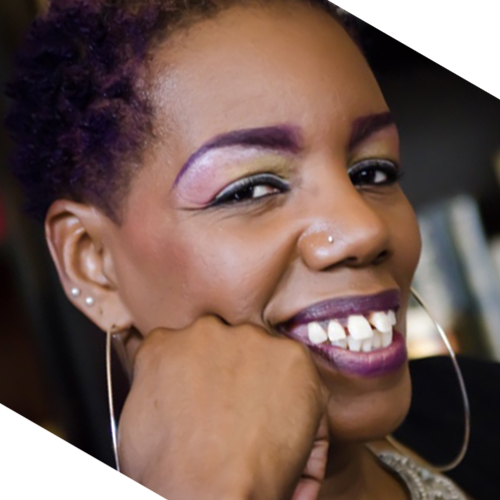
L’Monique King: So, how long have you been involved in the field of journalism?
David Aaron Moore: Hmmm, let’s see. Oh good God <chuckling> 30 years, almost all of my adult life.
LMK: How’d it all begin? How’d you get your start?
DAM: I was in Atlanta, working for an independent television station and decided print media was the direction I wanted to go into, because I enjoyed writing more than I did production. But I did find that many of the skills transferred over nicely.
I got my start at a publication in Atlanta called Etcetera Magazine where I was the Arts & Entertainment Editor and a staff writer. At the same time I was writing a column for Creative Loafing (an alt-weekly press) also in Atlanta. I worked for them for five years and it was a lot of fun. Especially being able to interview some really incredible people. I interviewed some amazing people like Quentin Crisp, Grace Jones, John Travolta, Janelle Monae, John Waters and Boy George [to name a few].
LMK: But why? Why journalistic writing?
DAM: Why not? I love it.
LMK: What just gets on your last nerve, within your field or otherwise?
DAM: People that support Donald Trump, right wing conservatives and the use of repetitive catch phrases like “authentic true self,” “nothing burger” and “there’s no there there.” Certain phrases and words get overused by talking heads and when that happens they lose their validity and almost become trendy or a fad. In my opinion that weakens the punch and takes away from their true authenticity.
LMK: You mentioned having interviewed some noteworthy people. Who would you say is the most interesting person you’ve interviewed to date?
DAM: I would say Grace Jones, maybe? She was intense and funny, but she was so fucking complicated to schedule for an interview. <Laughter> During our conversation she was drinking wine straight from a bottle. While we were talking, she said to me, “I don’t want to talk about Ahn-dee” – she was talking about Andy Warhol’s death – but 20 minutes later, once she was comfortably inebriated she suddenly announced, “okaaay, weee caaan talk about Ahn-dee now,” and she proceeded to spill all this stuff that kinda’ shocked me, but was great. Cindy Lauper was very interesting, too, because she cares so much about the world outside of her music. I can’t imagine anyone meeting her and not liking her. Then there’s Eartha Kitt, another intense experience, interviewing her. So, it might be a toss-up between the three.
LMK: Speaking of celebrities, who is your current celebrity crush?
DAM: Seth MacFarlane [actor, animator, writer and creator of “Family Guy” and “Orville” television series]. He’s creative. He’s funny. Intelligent and politically aware. And he’s handsome. The total package.
LMK: During your extensive career as a journalist, is there a particular story that you’ve written that has had a strong or indelible impact on you?
DAM: Whew. That one I just did on the Campus Pride finance issue – and we’ll just leave it at that – was a lot. That’s still fresh in my brain. But there was one in the 1990s in Atlanta that involved a number of Black trans sex workers who were found dead, their bodies thrown in dumpsters and stuffed in trash cans. There was an individual I interviewed who described this suspected serial killer – she called him “Overcoat Slim.” When he showed up, somebody would disappear. It was awful and it just kept happening. The murders were never solved during my time in Atlanta and it felt as though the victims had no one to advocate for them and nobody cared. It was disconcerting. It really stuck with me and had a huge impact on me as a writer for LGBTQ press. The saddest thing is the situation hasn’t changed that much. Every year we run a story on all the trans people who have died and/or been killed. But wouldn’t it be better if they hadn’t lost their lives in the first place, if we were able to do something to prevent their deaths?
LMK: Do you think there’s something that could have or can be done about that?
DAM: With the current polarization of culture and politics in this country and the lack of gun control I don’t know the answer to that. My thoughts are – what would fix it is compassion and education and our country just isn’t there right now.
LMK: Do you think LGBTQ representation in media has come far enough to make an impactful difference?
DAM: I did. But again, a change in our political climate. When we frequently saw LGBTQ representation in the media prior to the time Trump was in office, people seemed to be getting increasingly comfortable every day with LGBTQ visibility across the board. Fast forward a few years and CNN cans Don Lemon and appears to be slowly but surely erasing Anderson Cooper. They were both considered mainstream journalists, who happened to identify as gay men. And now, the very topic of anything queer feels untouchable again in mainstream media. It’s avoided. So, I think it’s important again to make sure we have a vibrant LGBTQ press we can turn to for information.
LMK: When the work of journalism takes its toll, who is your greatest supporter?
DAM: My sister Kathy. She’s a strong supporter of me as an individual and of my work. She’s very patient and has always been there to help when I needed it. She’s been through a lot in life and is still able to be funny and find humor in things. She’s been a constant rock for me.
LMK: As a writer and journalist, would you share your feelings about AI (Artificial Intelligence)? Are you concerned about your job or the future of journalism?
DAM: No, I’m not worried about true journalism being impacted by AI, but I do feel like it’s almost indicative of the dumbing down of America.
LMK: As an author you are often tasked with describing others. Using five words, describe David Aaron Moore.
DAM: I gotta’ think about that for a minute. Weird? I’ve been told that before by the banker worker bees. I take it as a compliment, though. It’s hard to talk about yourself like this, but, I guess I’d also say I’m curious, passionate, I’ve been told I’m funny and I care. About people. And animals. And world issues.
LMK: When you aren’t editing or writing, how do you spend your free time?
DAM: Playing with my dog Della (named after Della Reese), driving my old Chrysler convertible. I love historic films. It always makes me feel like I’m looking through a window into the past. And I really enjoy exploring old forgotten places. Things like abandoned buildings, cemeteries and old churches. But, you know, I don’t ever stop thinking about the stories that are attached to wherever I am. I guess my career is such a part of my life, even in my spare time I’m thinking, “I wonder what the story is behind that?” It’s like a painter or sculptor. They never stop being an artist. Even when they’re at home watching TV or out for dinner or sleeping, they’re still an artist. So, no matter what I’m doing, that awareness of the world around me, it’s always there.
LMK: Any words of wisdom you’d like to share with aspiring young LGBTQ writers?
DAM: You probably already know if you’re good with words and language. If you are, don’t get hung up in the waiting to get ready syndrome, or you’ll never get anything done. Put yourself out there and pitch and network to websites and publications. If you really want to make a living at it, be diverse and ready to write about anything. If you’re a single-focus kind of writer, and a lot of writers are, know your voice. A lot of people want to contribute to the fight for LGBTQ equality and visibility, but not everybody is an activist. Writing for queer press is a major way to contribute to our community. And especially if you’re in the Carolinas, send me an email. We’re always looking for new stories and new voices.
