

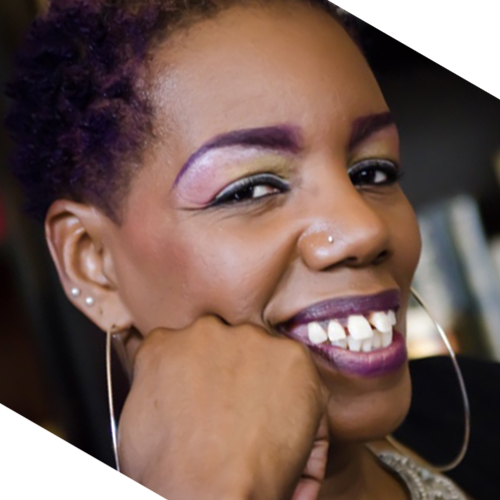

We’re living in stressful times. Anti-LGBTQ+ legislation seems to be at an all-time high and most media outlets are inundating us with tragedies that just make us want to go back to bed with the covers pulled over our heads.
However, there are still rays of hope and people right within our communities doing the work to keep us sane, whole and focused on a more positive future. Earl Martin is one of those rays of light in a world that can seem quite dark and daunting.
Originally from Columbia, S.C., Martin is a Winthrop University graduate, practicing therapist, podcaster and author residing in Charlotte. Today, Martin identifies as a Black gay professional, but if he could he’d awake as an African elephant. During this interview we learned a little more about Martin, his work, joys and a stellar memory that makes him well suited to becoming an elephant.
L’Monique King: How long have you been Charlotte and what brought you to the area?
Earl Martin: I’ve been here since August 2017. I went to school in Rock Hill and when I graduated, I wanted to live somewhere that was far enough yet close enough from home; Charlotte seemed to be that place – I love it. I think Charlotte is really its own pocket of the south with a good combination of all the demographics. I have a lot of friends [living in the area] and many are therapists also. The move itself has been good for my career.
LMK: You mentioned having friends who are therapists. As a child, is that what you wanted to be when you grew up?
EM: Actually, I wanted to become a criminal justice attorney. <Laughter> Crazy as hell! I don’t like court, but for some reason, I was an intern for the Department of Juvenile Justice during my senior year of undergrad. During my internship I learned that I hate the bureaucracy, tone and energy of courtrooms. I’m just not a fan and it’s in my nature to challenge authority. I think that’s why I’m a social worker today. I was on a law track in high school but when I got to college, I felt it was more impactful to be a therapist and assist people with challenges in their lives, addressing trauma, versus being in a courtroom and helping you with a case. In my last role I was an intimate partner violence therapist for the county. I still ended up being in the courtroom helping those survivors with their cases – providing background and treatment for their mental health.
LMK: As a therapist, does your profession pose any challenges with friends or family? Are you ever burdened by folks who are close to you routinely seeking your advice or mental health expertise?
EM: No. My friends are very respectful of boundaries. With my friends, my conversations are rooted in therapy but delivered in general conversation. However, in emergencies, I’m good with providing resources but it’s not an everyday thing. I’m the friend that shows up and will listen – I’m very intentional about my relationships and will show up for the smallest of things. When I’m engaging my clients, I say to them, “You are the captain. I’m here to assist you in navigating your life goals.” I don’t tell people what to do. As a trauma therapist, I’m here to help you unravel the tapestry of your life – not tell you what to do.
LMK: Considering the current climate of anti-LGBTQ legislation have you noticed any upticks in mental health conditions with the LGBTQ community?
EM: My practice was built and geared towards Black LGBTQ individuals. Anxiety is there but I don’t think there’s an uptick. As Black folks, with our intersectionality, most of what’s going on is not surprising and our resilience has shown through. But again, with the world seeming like it’s on fire and changing every day – anxiety is something I’ve noticed. Along with uncertainty, which feeds anxiety.
LMK: What suggestions can you offer to folks who are feeling overwhelmed, anxious or depressed?
EM: Let’s root ourselves in the facts. Many times, anxiety is the fear of the unknown. Many times, we create narratives that aren’t necessarily rooted in reality. If you’re going to look at the worst-case scenario also look at the best-case scenario – [your outcome] most likely could fall somewhere in the middle. I’m always about doing what’s in your control. Find pockets of joy and create that for yourself. There’s no such thing as balance – it’s about creating harmony. Life is like water; there are ebbs and flows. Sometimes you’ll have control, sometimes you won’t. So, the real lesson in life is learning how to pivot. When your toolbox is rooted in tools like boundaries, coping and pivoting – your resiliency increases and so does your window of tolerance.
LMK: If metamorphosis was within your control and you could wake up tomorrow as an animal, what would you be?
EM: An African elephant <laughs>. I love what elephants represent and their memories, of which I have the same capacity. It’s a blessing and a curse. Fun fact, I’m obsessed with animals, always have been. You’d think I would be a zoologist. My mom still calls randomly to test me with animal facts to see if I still know lots about animals. She strives to get me one day with a fact I’m unaware of.
LMK: Are you partnered?
EM: I am not – I want to be. I want someone who is considerate, committed, ambitious and family oriented. Being partnered with someone who is considerate is the biggest thing for me. I don’t think most people are as considerate as they think they are.
LMK: Who buoys your positive mindset? Who are your top three cheerleaders?
EM: Can I have four?
LMK: Absolutely.
EM: First, my mom. Then my three best friends, Victoria, Sierra and Alfred.
LMK: What would your besties say is your worst trait?
EM: I’m very no nonsense. If you’re bringing chaos, I have no problem cutting people off. People love to say grace, grace, grace. But grace in itself is a privilege – and not everyone deserves that privilege; [it] depends on the offense. I believe people should lead with grace, but it doesn’t necessarily mean that connection remains. So, my friends would probably say it’s my best and worst quality.
LMK: Tell us about your podcast. We know that grits are a staple in southern comfort food but didn’t know you could get a serving via a podcast. Can you shed some light on that for our readers?
EM: G.R.I.T.S [stands] for Gays Raised in the South. It’s about amplifying the voices of Black queer individuals with an emphasis on Black gay men raised in the south and how the south shows up for us in our unique experiences.
LMK: What prompted you to get into podcasting?
EM: Honestly, my co-hosts and I have all known each other since college – sharing over 10 years of friendship. We found ourselves always having these deep conversations. We were all raised in the south but had different experiences. So, instead of just talking about it we decided to be about it. It’s going well though two of the four co-hosts have moved out of Charlotte. One is now in D.C. and one relocated to Chicago; so we’re doing more virtual work right now.
LMK: As someone with such a warm and easy-going demeanor, what makes you frown?
EM: Ignorance! Ignorant people and terrible drivers. Thankfully a lot more things make me smile than frown. But ignorance and intolerance make my skin hot. I really do not like people who lack empathy and compassion, that drives me up a wall. Then there’s people smacking when they eat or dragging their feet when they walk – I hate that.
LMK: As the captain of your own life, what self-improvement goals are you navigating?
EM: I am working on letting folks in more.
LMK: We’ve heard, one such way of letting people in is through a new book you’re a contributing author for. What’s Queering EMDR Therapy about?
EM: It’s an anthology of traditional academic essays, tools for EMDR (Eye Movement Desensitization and Reprocessing) Therapists, poetry, personal narratives, visual art and even a short graphic novel. LGBTQ+, neurodivergent, kink-affirming and polyamorous perspectives are all included in Queer EMDR Therapy. All the contributors are EMDR Therapists. I’m one of 26 contributors and very proud to be part of this. In my chapter, I explore “EMDR: An Intersectional Lens from a Black Gay Man Raised and Practicing in the South.” I also created the [graphic] collage to go with the chapter.
LMK: Assuming that you’ve seen all the social media hubbub about rapper Snoop Dogg’s comments on same gender loving people being reflected in children’s films, any comments or words of advice to Snoop?
EM: I don’t have/offer advice for grown folks who have access to Google. There’s a ton of information and knowledge to be found on the internet. And I’m talking evidence-based peer reviewed articles, not Facebook.
LMK: How about parents of LGBTQ youth? Any words of wisdom for them?EM: Your job is to love your child. Love your child. Have conversations and allow your own window of tolerance to stretch so you can learn. Your child is your teacher and you are your child’s teacher as well.