

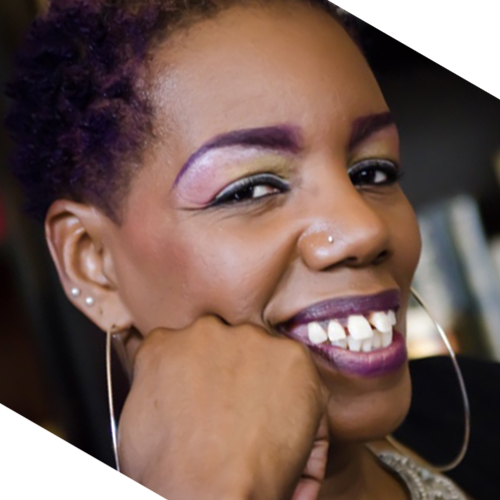

“You have to go the way your blood beats. If you don’t live the only life you have, you won’t live some other life, you won’t live any life at all.” When famed author and social justice warrior James Baldwin said that – he couldn’t have possibly known how much his words would capture many of our community members. A native Charlottean and a creative artist in many fields, Ali Steele is surely one. Steele is firmly ensconced in “going the way his blood beats,” traveling across continents to learn, grow and spread love in a way only he can – Steele lives fully. In this interview from his living room – an artistic space, flooded with art and African artifacts – Qnotes learned more about his journey to empowerment, love and distant lands.
L’Monique King: So, you were born and reared in Charlotte? That’s rare.
Ali Steele: Yes, I am a proud Charlottean. I went to Hornets Nest Elementary, Ranson Middle School and West Charlotte High School.
LMK: Have you ever considered leaving?
AS: I have attempted and will probably end up being bi-coastal. I tried to live in Atlanta and Miami for a little bit, but there’s nothing like home. Charlotte is where I come from and I’m just so proud to be from here and all the growth Charlotte has had. It’s home – even with all the gentrification.
LMK: What’s it like for you – being a Black gay man in the South?
AS: My mother is my biggest supporter and my best friend. I didn’t really give my family a choice but to accept me. I just didn’t take no for an answer. [As for living in the South] I’m me and at the end of the day I am part of the [LGBTQ] community, but my sexuality doesn’t define me in totality. I’m a nature guy, I’m a community health worker, I’m multifaceted. I’ve also stood by my sexuality as being my business, not community business. I live in my truth but I grew up in a time where being bullied was the norm – so when it came to fight or flight, I’ve always chosen to fight. When I see people being bullied, I stand up for them because standing up for them means standing up for me. I’m still a man at the end of the day and I will not be disrespected. Being who I am and as an African Spiritualist – I’ve been taught to stand in my strength.
LMK: Do you have any siblings?
AS: I have a sister through my mom. She’s a realtor in Charlotte and works hard at making sure people of color can become homeowners. She’s two years younger but she’s like my little big sister. I also have seven other siblings: two boys and five girls by my father. I’m close with most of my siblings. The youngest is currently in the 11th grade and attending West Charlotte where I graduated from.
LMK: Sounds like there’s a lot of love in your life. Are you partnered?
AS: There is. I’m currently engaged to an amazing person, Zed. He’s from Mississippi and working on his doctorate. He’s in the medical field as a mental health practitioner and one of the biggest blessings of my life. We live in a world where everyone has this idea of who they want their significant other to be and how they want them to contribute [to their lives and relationships]. With him I can always be myself and I’m accepted for all of that I am, good or bad. That’s hard to come by in this lifetime.
LMK: What do you do for a living?
AS: A lot – I do a lot for a living <chuckling>. My greatest passion is my art. I’ve been writing and performing music for years now – all of my life actually. I’m a choir boy and grew up in the church, but at 18 I started writing and performing my own music. It’s available on all the major platforms – Apple, Google, Spotify, YouTube – it’s everywhere.
LMK: What kind of music do you produce?
AS: Most of my music is about reconnecting to nature, our experiences as people of color throughout the diaspora, life experiences and love. It’s about healing, like I’ve been healed through music.
LMK: Who do you listen to? What are the top three songs on your playlist?
AS: <Laughter> It’s going to be really ratchet. Um, let’s see; “If You Want It” by Sexy Red, “Feeling on My Body” by Taffy & Pluto and my song “Got Damn ‘Mantra’” featuring local poet Sade Sade.
LMK: Can you share a little about who you are as an artisan?
AS: I’ve only been back working for a steady paycheck for about three years now. Up until then, I’ve also been an entrepreneur and founder of Ethnic by Ali, now called Osain Sun. The name changed because Ethnic by Ali was a reflection of my experience in African Spirituality. I’d take what I’d learned and try to bring it back to my community.
The source of my artistic and creative ideas flow from and through nature. Osian is the Orisha that I primarily work with. An Orisha is an extension of Olodumare (equivalent to God in Western Civilization) it’s an African spiritual practice – of characteristics and energy through nature. Many times, when you talk about African spirituality people try to make it into something pagan or something polytheist when in actuality it’s monotheist – believing in one God. As an entrepreneur I’ve challenged all that into hosting the Healer’s Market (which includes entertainment, yoga, horseback riding and the sale of handmade soaps and shea butter) and facilitating hiking groups that chase waterfalls through North Carolina. This year for Black History Month I’m thinking about repeating one of my favorite hikes to a waterfall near Nina Simone’s house. For me, it’s all about exposing our community to things that are geared towards a more holistic way of living. It’s not about being perfect, it’s about healing and being at peace.
LMK: How’d you get into making your own shea butters?
AS: My mom taught me how to make custom shea butters made with essential oils. In 2018, I took a trip to Ghana to visit and study the Akhan people and others from Ghana. I was exposed to hand made crafting with African brass. I had the brass imported from people I met there and started making jewelry from the brass and trade beads; beads made from recycled glass.
LMK: Is Black History Month important to you?
AS: Definitely. It’s a celebration and reflection of the hard work and excellence of my people, our ancestors and all they have contributed to this nation. It’s our legacy, our past and our future.
LMK: With all your thoughtful and creative endeavors, do you also have a nine to five job?
AS: During the day, nowadays – I’m employed by Quality Comprehensive Health Center as a linkage to care coordinator. Basically, I’m a liaison between clients and the organization, assisting clients in their care and their needs for housing, food and medicine. Quality has its own pharmacy where clients can get their prescriptions filled onsite. It’s very rewarding work. Working at The PowerHouse 2.0 (the HIV Intervention and Prevention Division) is the best job I’ve had and I’ve done a lot of things. I worked in telecommunications, worked wiring trucks (better paying but hard on the body), fast food (as a teenager), childcare and none of those jobs made me feel like part of my community. Someone once told me, I could either work to build someone else’s dream or work to build someone else. With this position I feel like I’m living my dream of servicing my community and I’m able to provide for myself at the same time.
LMK: When you’re not involved in working and your many creative endeavors – what do you like to do?
AS: Travel, of course. I recently returned from Benin. It was a beautiful African experience. It was a place where you could walk into a community and everyone (of all religious faiths) came together to celebrate African spirituality. I got to see Ganvie’ – the continent’s largest water village. I also visited the space of an African King, a festival and saw the huge statue depicted in the movie Woman King – an ode to the African female warrior of the Dahomey tribe. It was all amazing.
LMK: Having visited other nations, what are your thoughts on the current U.S. political climate?
AS: I just think it’s really unfortunate that we’re in a time when so many people who have done so much work towards progress are now seeing the funding of that progress being taken away. It’s very disheartening, but we have to remember, where there’s a will, there’s a way. Quality, where I’m employed, does good work in finding alternate ways to provide for our LGBT community, people living with HIV and other ailments access the care and medications they need. So, I’m more hopeful that as a community that we continue to stand together in finding a way to provide needs for each other – with or without the powers that be.
LMK: If you could go back in time and speak to your younger self, what would you say?AS: Take time to really love yourself, get to know yourself, create boundaries and take time to love and appreciate the people who have made a way for you. Community used to be in your backyard, now our neighbors are strangers, and we have to come together to find and create community because our children may not see or find it where they live. When you’re surrounded by hate it’s hard to see love within yourself. Especially for those in community, church, school, etc… Community is important because we live in a world where we’re not taught to love ourselves, especially those of us who are part of the LGBTQ community like me. We’re scrutinized and sometimes ostracized. The feelings of self-doubt [many of us experience] often come from trauma and not learning to love ourselves. If I had understood that as a young person – I would have done so much more [in loving and taking care of me] sooner instead of taking so long to get there. That’s my wish for our youth, our community, our world – that we find that self-love and embrace it sooner.